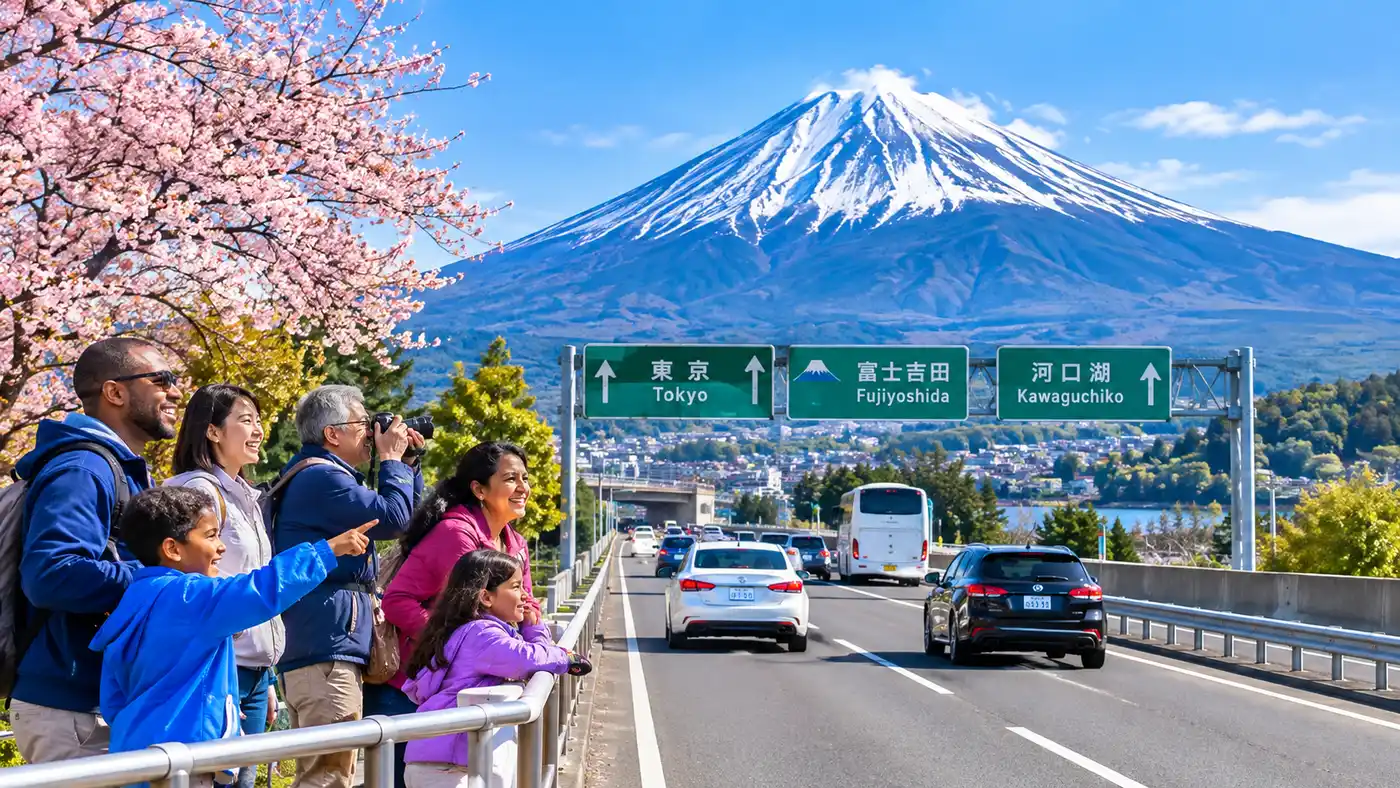
Driving from Tokyo to Mt Fuji: Tolls, Car Rental, and Taxi
Most travelers squeeze themselves into the morning express trains from Shinjuku, staring at timetables and jockeying for window seats. That works fine, but driving from tokyo to mt fuji gives you total control over your day. You can stop for canned hot coffee at mountain parking areas, chase clear views when the clouds shift, and reach rural noodle shacks that buses never visit. It turns an ordinary sightseeing checklist into an actual road trip.
The journey involves winding multi-lane expressways, automated toll gates, and some of the cleanest rest stops on earth. Whether you want to grab the steering wheel yourself, reserve a chartered van, or split a cab, getting to the base of the volcano by road requires a bit of upfront planning. Between electronic toll cards, mountain switchbacks, and Tokyo morning gridlock, here is what you need to know before putting the key in the ignition.
Book your mt fuji from tokyo experience:
How Long Is the Drive from Tokyo to Mt Fuji? Routes and Distance
The actual distance from tokyo to mt fuji by car sits between 100 and 135 kilometers, depending on your Tokyo starting neighborhood and which side of the mountain you want to reach. If you head straight for Lake Kawaguchiko along the northern base, expect roughly 105 kilometers from central Shinjuku. Driving down toward Fujinomiya or the southern foothills via Gotemba adds another 20 kilometers to the speedometer.
How long is the drive from tokyo to mt fuji on an average morning? If wheels are rolling by 6:00 AM, the drive from tokyo to mt fuji takes about 90 minutes. Clear asphalt and high speed limits make it surprisingly fast. Leave Shinjuku at 8:00 AM on a sunny Saturday, though, and you will easily spend three hours crawling past suburban strip malls. The bottleneck near the Kobotoke Tunnel on the Chuo Expressway is notorious among local drivers for eating up entire mornings.
Two primary expressway arteries connect the capital to the mountain. The Chuo Expressway runs west through the mountains of western Tokyo and Yamanashi Prefecture, dropping you directly at the northern lakes. The Tomei Expressway tracks further south through Kanagawa, bypassing Yokohama before splitting toward Hakone and Gotemba. For a wider comparison of travel times across different transport modes, check out our guide on how far Mt Fuji is from Tokyo.
Note: Weekend traffic returning to Tokyo on Sunday evenings can back up for 30 kilometers on both the Chuo and Tomei expressways. Plan to return either before 3:00 PM or after 8:30 PM to avoid idling in long jams.
Toll Fee from Tokyo to Mt Fuji and the ETC Card System
Japanese highways are immaculate, smooth, and expensive. The toll fee from tokyo to mt fuji reflects the sheer engineering required to punch tunnels through the volcanic mountain ranges. A one-way trip from central Tokyo to the Kawaguchiko interchange on the Chuo Expressway runs about 3,600 to 4,200 yen for an ordinary passenger car. Double that for the return journey, and you are looking at around 7,500 to 8,400 yen just for highway privileges.
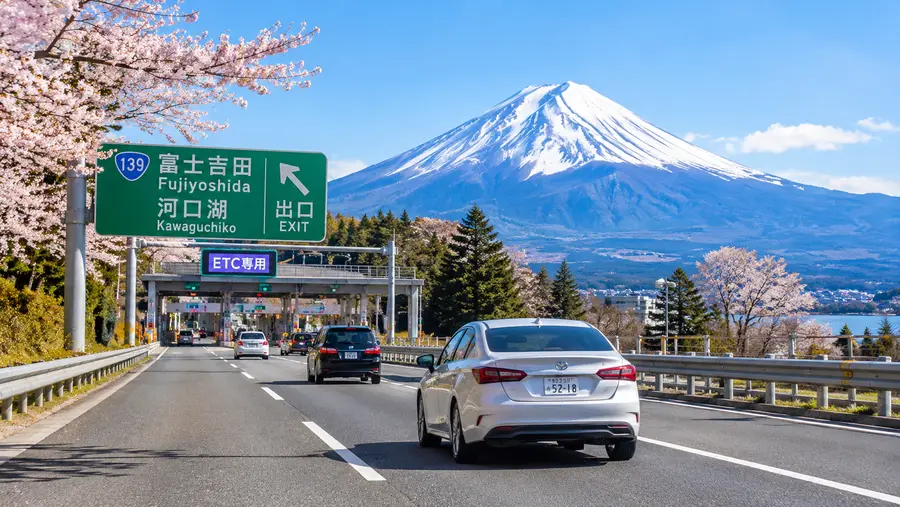
Expressway gates are split into purple ETC lanes and green cash lanes. ETC stands for Electronic Toll Collection, a windshield transponder card that logs your entry and exit points automatically. Cash booths still exist, but they slow you down, demand exact coins or crisp bills, and miss out on the late-night and weekend discounts built into the digital toll network.
Pro tip: Always ask your rental desk for an ETC card rental, which usually costs a flat 330 yen fee. When you bring the car back, they read the card's computer chip and bill your toll balance to your credit card on the spot.
Here are a few practical rules for dealing with Japanese toll gates on the way west:
- Approach ETC gates at 20 km/h: The automated gate arms will not open until the roadside sensor registers your card, so rolling through at full speed will snap the barrier.
- Keep cash tucked in the console: A few rural bypass roads and scenic volcano drives - like the Fuji Subaru Line - do not accept standard rental ETC cards and demand cash at the booth.
- Watch for dynamic lane signs: Approaching major junctions, overhead illuminated signs show toll lane closures and live delay estimates in red Japanese characters and green icons.
Renting a Car in Tokyo: Costs, Pickups, and Driving Rules
Renting a vehicle in Tokyo is straightforward once you have the paperwork squared away. Daily rental rates for a compact five-seater like a Toyota Yaris or Honda Fit run between 7,000 and 11,000 yen per 24 hours. Larger minivans for families naturally climb to 16,000 yen or more. Insurance coverage adds roughly 1,500 yen per day, and skipping it is simply not worth the stress on narrow mountain roads.
Picking up the car inside central wards like Shibuya or Shinjuku drops you directly into intense metropolitan traffic. Navigating pedestrian crossings, bicycle couriers, and multi-deck overpasses while sitting on the right side of the car can rattle your nerves if you are not used to it. An easier option is taking a suburban train out to Tachikawa or Hachioji and picking up your rental vehicle there. You skip the inner-city spaghetti junctions completely and merge straight onto the mountain-bound highway.
You cannot rent a vehicle in Japan without an International Driving Permit (IDP) issued under the 1949 Geneva Convention, paired with your home country license and physical passport. Rental agencies examine these documents carefully at the counter. Travelers from Germany, France, Switzerland, and Taiwan must bring an official Japanese translation of their home license from the Japan Automobile Federation instead of an IDP.
Speed limits feel surprisingly low to foreigners. Most expressways max out at 80 or 100 km/h, while two-lane mountain passes drop to 40 or 50 km/h. Speed cameras are common on the Chuo corridor. Keep in mind that Japan maintains a strict zero-tolerance policy for drinking and driving. Even a single beer at lunch will put you past the legal limit and carry severe criminal penalties.
Book your mt fuji from tokyo experience:
Private Car from Tokyo to Mt Fuji vs Taking a Taxi
If nobody in your group wants to deal with left-side driving, you have two road-based alternatives: hailing a taxi from tokyo to mt fuji or booking a chartered private car from tokyo to mt fuji. These sound similar on paper, but they function completely differently in practice and cost.
Walking up to a taxi stand at Tokyo Station and asking the driver to take you to Lake Kawaguchiko is theoretically possible. The cab driver will gladly turn on the meter, but your wallet will pay for it. A standard metered taxi ride one-way easily exceeds 42,000 yen, not including expressway tolls. If traffic snarls, that meter just keeps ticking upward while you sit stationary on the asphalt.
Hiring a pre-booked private car with an assigned chauffeur makes much more sense. A private chartered Alphard van or HiAce van costs around 55,000 to 75,000 yen for a full 10-hour day trip. That flat rate covers your driver, gas, highway tolls, and direct door-to-door service from your Tokyo hotel lobby. Split among four to six passengers, the cost per person drops to an amount competitive with higher-end group bus tours, with the added luxury of sleeping the entire way home.
| Transport Option | Estimated Cost (Total) | Drive Time (One-Way) | Best For |
|---|---|---|---|
| Rental Car (Compact) | 16,000 - 22,000 yen (incl. tolls & gas) | 1.5 to 2.5 hours | Independent couples, rural exploring |
| Chartered Private Van | 55,000 - 75,000 yen (flat day rate) | 1.5 to 2.5 hours | Families, groups of 4-6, total relaxation |
| Metered Tokyo Taxi | 40,000 - 50,000+ yen (one-way only) | 1.5 to 3 hours | Emergency travel, business expense accounts |
Scenic Mountain Roads and Base Highlights
Having wheels unlocks the entire perimeter of the volcano. While train crowds stay bunched along the eastern shore of Lake Kawaguchiko, you can steer toward Lake Saiko, Lake Shoji, or Lake Motosu. The western lakes are far quieter, bordered by dense pine forests and rustic camping spots where mist curls off the water at dawn.
One of the most famous drives in the region is the Fuji Subaru Line, a private toll road charging around 2,100 yen round trip that climbs straight from the lake basin through subalpine forests to the Mt Fuji 5th Station. If you plan to head up the slope, read our breakdown on visiting the 5th station from Tokyo, because the road closes to private passenger cars during the peak summer climbing months to cut down on exhaust fumes.
Driving allows you to assemble an itinerary that fits your own pace without checking bus timetables:
- Oshino Hakkai springs: Eight pristine spring ponds fed by melting mountain snow, best visited before 8:30 AM before the tour coaches pack the narrow lanes.
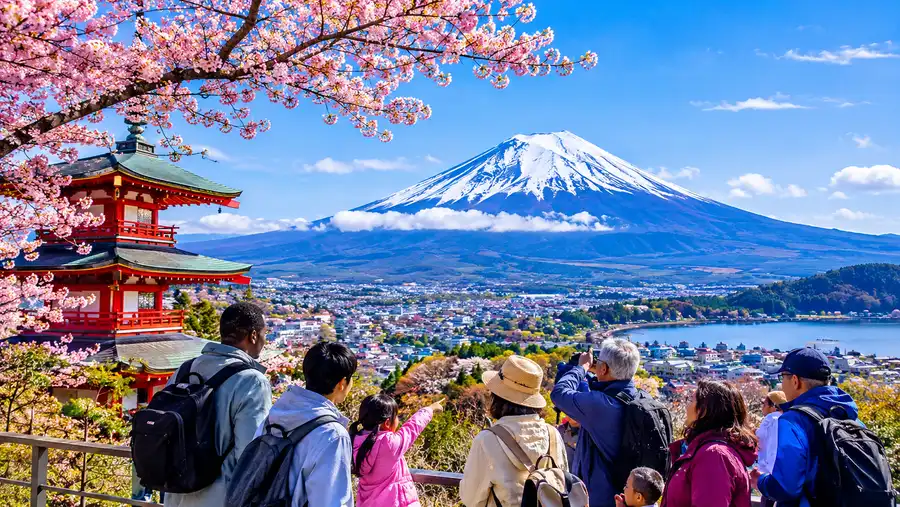
- Arakurayama Sengen Park: Home to the iconic Chureito Pagoda, featuring a massive free parking area at the base of the long hillside stairway.
- Lake Motosu viewpoint: The exact scenic angle immortalized on the back of the Japanese 1,000 yen banknote, virtually inaccessible without a car.
- Fujiyama Onsen: A traditional wooden bathhouse near the expressway interchange where you can soak sore muscles before tackling the evening drive back to Tokyo.
Gas stations along the lake loop are easy to manage. Most chains - like ENEOS or Idemitsu - offer both full-service bays and self-service pumps. If you pull into a full-service bay, attendants will pump regular gasoline (ask for legyura), wash your windshield, and take your payment through the car window. Fuel currently runs around 175 yen per liter, which is roughly $4.40 per US gallon.
Frequently Asked Questions about driving from tokyo to mt fuji
How far is Mt Fuji from Tokyo by car?
The road distance is approximately 105 kilometers to Lake Kawaguchiko on the northern side, or around 130 kilometers to the southern slopes near Gotemba, depending on your route.
Can tourists drive directly up Mt Fuji?
You can drive up to the 5th Station via the Fuji Subaru Line for most of the year. During the official summer climbing season in July and August, the road is closed to private rental cars to prevent gridlock, meaning only registered buses and taxis may pass.
Do I need snow tires to drive around Mt Fuji in winter?
Yes. From December through late March, temperatures around the Fuji Five Lakes drop well below freezing, and black ice is common on shady curves. Rental agencies in Tokyo can equip cars with studless snow tires for an extra daily charge.
Is driving on the left side difficult for first-time visitors?
Most travelers adapt within an hour. Expressway driving is simple because lanes are well marked with clear English signage, though you should take extra care when turning right across oncoming traffic at suburban intersections.
Quick Reference
- Distance: ~105 km from Shinjuku to Lake Kawaguchiko
- Tolls: ~3,600 to 4,200 yen one-way via Chuo Expressway
- Drive time: 90 minutes off-peak; 3+ hours during weekend rush
- Paperwork: Physical passport and 1949 Geneva Convention IDP required
Book your mt fuji from tokyo experience:
The Bottom Line
If you only want to snap a quick photo of the peak before rushing back to the neon alleys of Shinjuku, taking a highway express train will save you a lot of logistical effort. But if you want to pull over whenever the sunlight catches the snowcap, explore the quiet shores of Lake Motosu, and stop at rural soba restaurants on your own schedule, driving is unbeatable. Reserve a rental car with an ETC card, hit the expressway before sunrise, and enjoy the open road toward the mountain.
Read more about mt fuji from tokyo.